

Views: 0 Author: Site Editor Publish Time: 2026-09-22 Origin: Site


Hidden packaging costs frequently drain warehouse profits without management ever noticing. While corrugated boxes and stretch wrap dominate procurement discussions, wasted strapping materials silently inflate operational budgets. Operating with a bare coil of strapping sitting on a concrete floor represents a fundamental engineering error. Without proper dispensing equipment, heavy coils remain highly susceptible to tangles, physical damage, and excessive unspooling.
A precision-engineered dispenser acts as a foundational cost-control mechanism rather than just a simple metal frame holding plastic or steel. This comprehensive guide details how to calculate precise material usage, identify equipment features that prevent shrinkage, and ultimately cut your overall cost per pallet.
Accurate Forecasting is Essential: Utilizing a precise mathematical formula to calculate exact strap usage per package prevents over-ordering and eliminates supply chain bottlenecks.
Equipment Prevents Waste: A professional dispenser equipped with an automatic friction braking system stops coil unspooling instantly, saving significant meters of wasted strap every single shift.
Tool Synergy Matters: Pairing your dispensing cart with a reliable manual or pneumatic tensioning tool minimizes the required strap overlap, lowering the per-package consumable cost.
Strategic Sourcing: Partnering with direct suppliers and sourcing industrial-grade tools dramatically improves overall packaging return on investment without sacrificing operational durability.
Recent shifts in the global packaging sector reveal a massive move toward lean, data-driven procurement. Raw plastic prices fluctuate constantly. Meanwhile, corporate sustainability mandates continue to tighten across global supply chains. Modern facilities no longer bulk-order consumables based on simple estimation. Top-tier logistics centers now treat strapping as a strictly tracked asset.
Specifically, warehouse managers are utilizing precise per-pallet calculations to reduce their carbon footprint and optimize cash flow. The industry is moving away from disposable, low-quality tools toward highly durable, standardized packaging stations. This shift ensures that every millimeter of purchased material is utilized effectively, directly aligning with modern ESG environmental, social, and governance goals.
When evaluating warehouse expenses, packaging consumables represent a massive yet frequently under-tracked line item. Leaving a coil of polypropylene or polyester unprotected is a guaranteed recipe for inventory loss. A professional cart serves as the foundational tool for establishing strict material control. It transforms a chaotic packaging process into a predictable, highly measurable workflow.
The most critical feature of any high-quality dispensing unit is the braking mechanism. An industrial strapping coil carries significant weight and rotational inertia. Picture an operator pulling a length of heavy-duty woven cord strapping across the floor. When they suddenly stop, the kinetic energy causes the coil to continue spinning. This over-spinning creates loose, chaotic loops that easily tangle into an unusable mess.
An engineered mechanical braking system resolves this kinetic issue by utilizing a spring-loaded tension arm. The exact millisecond the operator stops pulling, this arm engages a friction brake directly against the coil. By halting this over-spin immediately, warehouses completely eliminate the daily accumulation of tangled strap. Over a fiscal quarter, saving those discarded meters directly translates to highly measurable dollar savings.
Strapping materials possess incredible tensile strength, yet they remain highly vulnerable to surface abrasions. Leaving a bare coil on the warehouse floor exposes it to forklift traffic, moisture, and abrasive concrete dust. Furthermore, if dust accumulates on the plastic, it transfers directly into the delicate gears of your tensioning tools, causing premature equipment failure.
Elevating the coil off the ground protects your consumable investment. Ensuring that the purchased coil remains in pristine, factory-grade condition goes beyond basic housekeeping. It serves as a highly effective budgeting strategy that maximizes tool lifespan.
To establish an airtight packaging budget, warehouse managers must abandon estimation and rely entirely on empirical data. Calculating the exact average usage per load allows procurement teams to forecast monthly expenses with pinpoint accuracy.
The foundation of your financial allocation begins with the geometry of your standard loads. To determine the base length required, measure the perimeter of the pallet or corrugated box. The standard formula involves multiplying the length by two, adding that to the width multiplied by two.
For instance, if you are securing a standard 48-inch by 40-inch pallet, the calculation is 48 times two plus 40 times two. This equals 176 inches of base strap per application.
Relying solely on the perimeter formula remains a common pitfall because it ignores the mechanical requirements of the sealing process. Tensioning tools require excess material to grip and pull the plastic tight. The strap must also overlap to accommodate a metal seal or friction weld.
As a standard engineering practice, add 6 to 12 inches of length per strap to account for this operational requirement. Using our previous example, the 176-inch base expands to roughly 186 to 188 inches of actual consumed material per cycle.
Understanding the difference between unstructured workflows and optimized stations highlights exactly where budgets leak. The following table illustrates the material savings achieved by upgrading your process.
Workflow Type | Average Tail Waste Per Strap | Tangling Loss Per Coil | Monthly Material Cost Impact |
|---|---|---|---|
Manual Guess-and-Cut | 18 to 24 inches | 10 to 15 percent | High overhead, frequent stockouts |
Engineered Dispenser & Tensioner | 4 to 6 inches | 0 percent | Optimized budget, predictable ROI |
This empirical data becomes your greatest asset during supplier negotiations. It ensures you never face a crippling stockout or overpay for expedited freight.
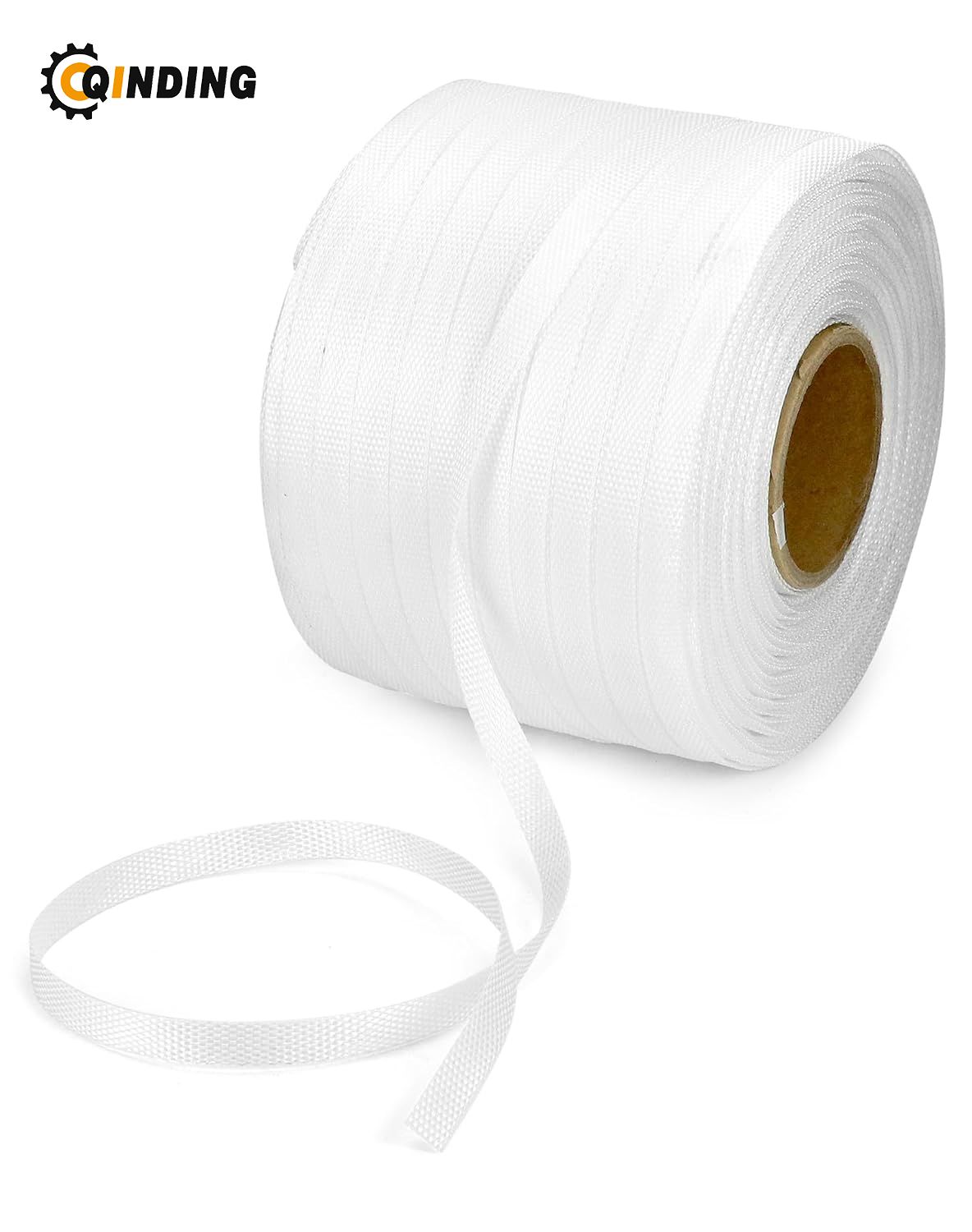
Not all warehouse carts meet strict industrial specifications. When allocating capital for equipment, selecting a unit that offers maximum versatility is vital. Guide your purchasing decision by evaluating specific mechanical features that directly impact daily operations.
Strapping coils feature varying inner core diameters depending on the material type. Common core sizes include 200 millimeters for standard polypropylene, and 406 millimeters for heavy-duty polyester or steel. Purchasing an adjustable China Strapping Dispenser with interchangeable core inserts is a prudent financial move. It guarantees that the facility can pivot between different materials without the sudden capital expenditure of buying entirely new hardware.
Labor time represents a massive component of your overall packaging budget. Operators who spend five minutes searching for misplaced metal seals severely reduce shipping throughput. A premium unit features a spacious, heavily reinforced built-in tool tray. This consolidates the entire packaging ecosystem into one mobile station.
In addition, stationary strapping stations inherently lead to material waste. When workers pull strap from a static location and walk it over to a distant pallet, they invariably over-pull. Investing in a dispenser built on heavy-duty rubber casters allows the operator to bring the coil directly to the load. This mobility eliminates the need to guess the required length.
A dispensing cart handles only one half of the packaging equation. It efficiently feeds the material, but the tensioning tool is responsible for securing the payload. The synergy between these two components directly impacts both material consumption and cargo security.
Manual pulling simply cannot achieve the required tension for secure transit. Attempting to do so often results in excessive material being yanked from the coil. A high-quality China Strapping Tensioner utilizes a drop-forged steel windlass mechanism to grip the plastic securely. Because the tool applies mechanical leverage, it requires a significantly shorter tail end to achieve maximum tension. Shrinking the required overlap from 12 inches down to 6 inches per application saves thousands of feet of consumable material annually.
Proper tensioning extends well beyond saving plastic. It fundamentally protects the payload. If a strap is applied too loosely, the load will shift inside the trailer, leading to crushed boxes and costly customer returns. Conversely, over-tensioning without the proper gauge can snap the strap entirely. A reliable hand tool suitable for 12 millimeter to 19 millimeter strap widths allows the operator to apply consistent pressure.
The procurement strategy you employ has a profound impact on your annual overhead. Working effectively with vendors requires a delicate balance between unit costs, cash flow, and warehouse storage capacity.
Procurement teams generally face two main strategies. Buying strapping coils in bulk from direct Packaging material Suppliers secures deep wholesale discounts and insulates the business against sudden supply chain disruptions. However, it requires significant upfront capital. Alternatively, Just-in-Time ordering frees up cash flow but leaves the facility vulnerable to stockouts. Utilizing the usage calculations outlined earlier allows businesses to order precisely enough bulk material to trigger discounts without over-leveraging floor space.
Selecting the cheapest strap available frequently results in higher long-term costs. Different loads demand different tensile strengths. Choosing a cheap polypropylene strap for a load of heavy lumber that actually requires weather-resistant woven cord strapping will result in snapped bands. The operator is then forced to re-strap the load entirely, instantly doubling the material cost.
Even with an airtight budget and a robust procurement strategy, the human element remains a highly volatile variable. Packaging budgets are frequently undermined by subtle daily operator errors that compound over time. Identifying these inefficiencies is just as critical as selecting the right hardware.
One of the most prevalent and costly mistakes is eye-balling the cut. This occurs when a worker pulls the strap from the coil, estimates the length required to wrap the pallet, snips the strap from the cart, and only then attempts to tension and seal it.
This practice guarantees shrinkage. Because humans naturally fear cutting the strap too short, they consistently overcompensate. If an operator wastes just 15 inches per strap on 100 pallets a day, the facility loses 500 feet of material daily. The correct procedure requires feeding the strap directly from the cart, around the load, into the tensioner, and executing the cut only after the sealing process is complete.
Another error driven by human psychology is over-strapping. Cautious operators often apply more bands than structurally necessary to ensure stability. Applying four heavy-duty straps to a lightweight, uniformly distributed box that only requires two is a fundamental misallocation of resources. Warehouse managers must establish documented, engineering-based packaging guidelines based on load weight and dimensions.
Industrial tools are mechanical devices that require baseline periodic maintenance. If the braking mechanism becomes clogged with cardboard dust, it fails to stop the coil from over-spinning. Similarly, a dull cutter on a tensioning tool will fray the strap instead of providing a clean snip. Frayed ends are nearly impossible to thread through metal seals. Implementing a simple monthly maintenance schedule prevents these hidden material losses.
Budgeting usage ultimately circles back to the hardware utilized to handle the materials. To maximize return on investment, operations managers must look beyond the initial purchase price of consumables and evaluate the long-term durability of their tools.
In the modern global supply chain, sourcing equipment directly from established manufacturing hubs provides a distinct financial edge. Purchasing reliable China Packaging Tools provides facilities with access to heavy-duty, precisely engineered equipment without the inflated markups associated with multi-tiered domestic distribution networks.
Direct sourcing ensures that facilities equip their staff with tools featuring advanced ergonomic designs, hardened steel components, and standardized replacement parts. When tools perform consistently under grueling warehouse conditions, operational expenditures drop significantly.
A piecemeal approach to warehouse equipment often leads to workflow bottlenecks. View your equipment as an integrated ecosystem to truly optimize a budget. A standalone cart is helpful, but its true value is unlocked when combined with the correct core inserts, a premium high-grip tensioner, quality seals, and the appropriate strap material. This holistic approach ensures every dollar spent on consumables is maximized.
Budgeting strap usage requires far more than simply hunting for the cheapest coils on the market. It demands absolute control over how the material is dispensed, measured, and applied to the load. A high-quality strapping reel dispenser pays for itself in a matter of months. By eliminating coil damage, preventing unspooling tangles, and saving valuable labor time, it transforms a messy expense into a controlled process. Audit your current packaging workflows, identify where the human errors lie, and choose the right industrial-grade equipment from reliable manufacturers like Qinding Tools to start maximizing your warehouse savings today.
Without a dedicated dispenser featuring a functional braking system, coils are subjected to the physics of momentum. When an operator pulls the strap and stops, the heavy coil continues to spin, leading to severe tangles. Because kinked strapping loses its tensile strength and cannot be fed through tensioners safely, businesses can easily waste up to 15 percent of an entire coil simply due to floor damage, dirt accumulation, and over-pulling.
Yes, most modern industrial carts are designed with versatility in mind. They feature adjustable core discs commonly accommodating 200 millimeter or 406 millimeter inner core diameters. This adjustability allows a single unit to securely hold various types of plastic and polyester strapping, preventing facilities from having to purchase and store multiple specialized carts.
Accurate forecasting relies on a simple formula. First, calculate the average strap length used per pallet, ensuring you include a 10 inch allowance for the tensioner overlap. Second, multiply that specific length by your average monthly pallet shipping volume. Finally, divide that total required footage by the total footage provided on the specific coil you intend to purchase. This yields the exact number of coils needed.
Excess strap is rarely a mechanical flaw in the tool itself. It is almost exclusively the result of incorrect operational sequencing. This happens when an operator cuts the strap from the coil before tensioning it around the load. Always leave the strap attached to the coil. Feed it directly from the cart, wrap the load, thread it into the tensioner, and apply tension. The strap should only be severed by the cutter after the metal seal has been fully crimped.
Industrial strapping dispensers typically accommodate two primary core sizes. Standard polypropylene coils usually feature a 200 millimeter inner core diameter. Heavy-duty polyester and steel strapping coils generally utilize a larger 406 millimeter inner core. High-quality dispensers include interchangeable faceplates or adjustable discs to support both standard dimensions seamlessly.
Maintaining the brake mechanism ensures the coil stops spinning instantly, preventing waste. Routine maintenance involves blowing compressed air around the tension arm pivot points to remove abrasive cardboard dust. You should also inspect the rubber or composite friction pad monthly for wear. If the pad glazes over or wears down to the metal backing, it must be replaced to maintain proper stopping power.


