

Views: 0 Author: Site Editor Publish Time: 2026-09-22 Origin: Site


Walk onto any busy shipping dock and you will likely witness this scenario. A worker steps up to secure a heavy pallet. They feed the plastic band through the clip and crank the handle. Suddenly, a sharp snap echoes across the floor. The material has broken under tension. While it is incredibly tempting to blame the manufacturer for a defective batch, my years of engineering experience in packaging logistics point to a different culprit. The fault rarely lies with production quality. More often than not, poor storage practices have quietly ruined otherwise robust packaging materials.
Polypropylene, commonly known as PP, is highly valued in the logistics sector for its incredible cost-to-strength ratio. However, it is far from indestructible. Keeping a PP strapping roll in spec means ensuring it retains its factory-grade tensile strength and flexibility. Achieving this requires strict adherence to temperature control, light shielding, and physical handling rules. In this comprehensive guide, we will break down the exact engineering protocols needed to maximize the shelf life and mechanical performance of your strapping inventory.
Thermal Regulation: Store your strapping between 40 and 80 degrees Fahrenheit to prevent the thermoplastic from becoming brittle in the cold or warping under excessive heat.
Zero Ultraviolet Exposure: Prolonged direct sunlight breaks down the molecular structure of the polymer. This chemical degradation leads to catastrophic snapping under load.
Structural Stacking: Always store rolls horizontally on their sides. This protects the inner cardboard cores from crushing and prevents edge damage that causes automated feeding jams.
Inventory Rotation: Implement a strict First-In First-Out system. Under controlled conditions, these packaging consumables typically boast a reliable shelf life of 12 to 24 months.
Mechanical Synergy: A perfectly preserved roll still requires the correct hardware. Utilizing high-quality tensioners ensures the strap reaches maximum holding force without sustaining mechanical shear damage.
To grasp why storage protocols must be so rigid, warehouse managers need to understand the material science behind their packaging. Treating a plastic band like a static piece of steel wire will inevitably lead to load failures during transit.
Polypropylene is a semi-crystalline thermoplastic. In the packaging industry, this specific molecular structure is what gives the band its unique properties. It possesses a high degree of flexibility combined with excellent elongation recovery. When a load shifts inside a moving truck, a healthy strap stretches slightly to absorb the sudden kinetic impact. It then returns to its original state, keeping the cargo tightly secured.
While highly resistant to chemical solvents, this material has a major vulnerability to extreme environmental exposure. When subjected to improper ambient conditions, the internal molecular bonds weaken rapidly. A compromised roll might look completely normal to the naked eye. Yet, when an operator applies maximum torque using a Strapping Tensioner, the degraded plastic simply cannot handle the stress. It fails and snaps violently. This delays shipping operations and creates a severe safety hazard for nearby personnel.
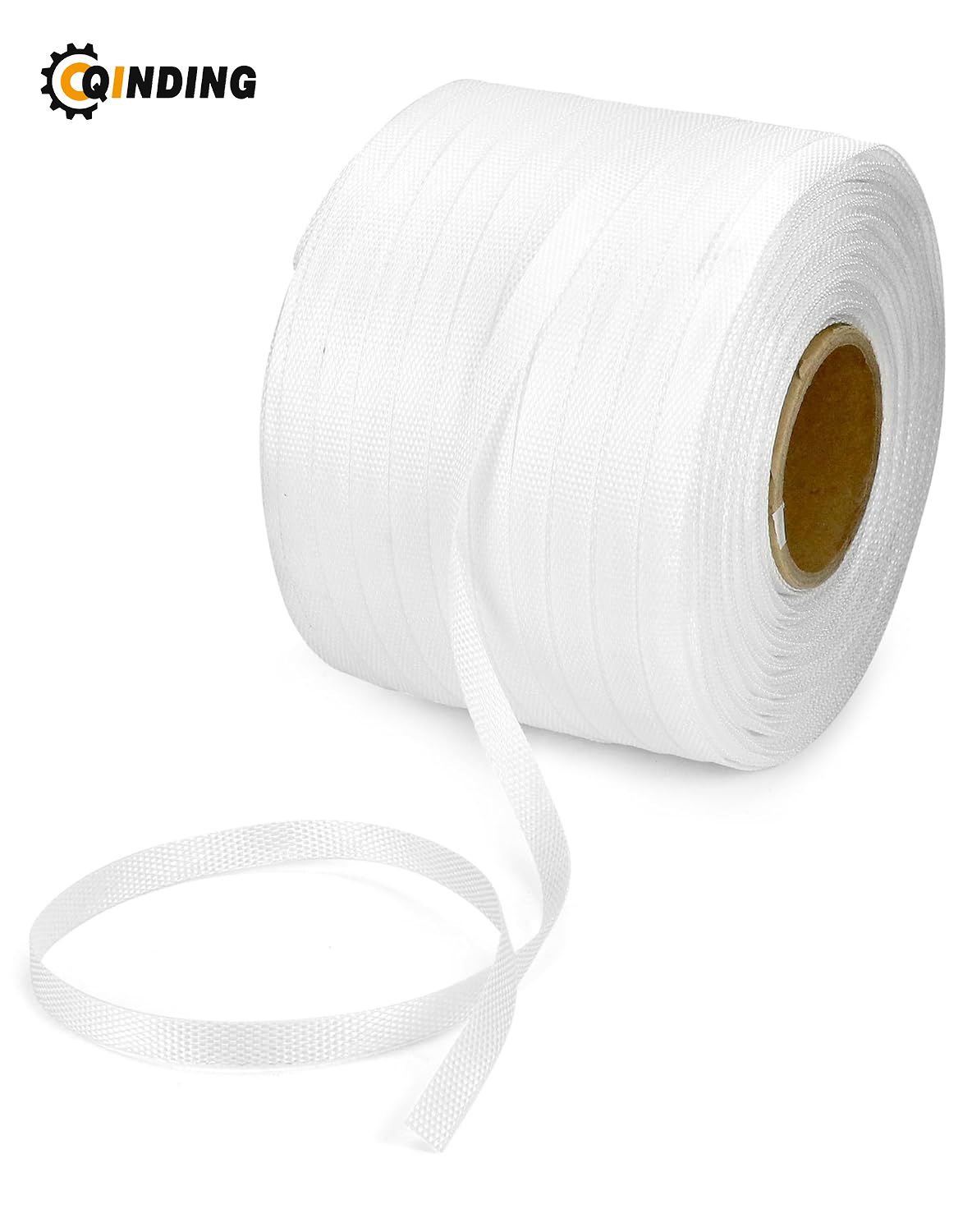
The most immediate threat to your inventory is a poorly regulated facility climate. Polypropylene reacts predictably to thermal changes. Therefore, ambient temperature regulation is a non-negotiable factor for maintaining structural integrity.
Consider a pallet of strapping sitting near a radiating space heater or trapped in an unventilated tin-roof warehouse during summer. Storing rolls in environments exceeding 90 degrees Fahrenheit causes the thermoplastic to soften. Prolonged exposure to extreme heat induces creep. This is an engineering phenomenon where the plastic slowly deforms under its own weight or the tight tension of the winding core. Furthermore, high heat causes the overlapping layers to stick together. This increases friction and leads to severe misfeeds in automated machinery.
In contrast, freezing environments pose an equally dangerous threat. Polypropylene has a glass transition temperature near freezing. When left on frosty loading docks during winter, the polymer chains lose their mobility. The material transitions from a flexible plastic into a brittle, glass-like state. If a freezing cold roll is immediately tensioned, it will almost certainly shatter. As a strict operational rule, always allow cold-exposed inventory to acclimate to room temperature for at least 24 hours before use.
Humidity also plays a critical role, though not for the plastic itself. The structural integrity of the entire roll relies on its inner cardboard core. High facility humidity allows the cardboard to absorb moisture from the air. Over time, the core softens and collapses under the inward pressure of the tightly wound plastic. This renders the roll completely unusable on standard dispenser carts.
Beyond ambient temperature fluctuations, ultraviolet degradation is arguably the leading cause of premature strapping failure. While specialized outdoor strapping does exist, standard PP bands are engineered strictly for indoor use and short-term transit exposure.
When exposed to direct sunlight, the material undergoes severe photo-oxidation. The UV rays penetrate the plastic and sever the carbon-hydrogen bonds within the polymer chains. This reaction creates free radicals that accelerate the breakdown of the material. The physical manifestation of this chemical destruction is a faded, chalky surface texture. A strap originally rated to hold 600 pounds might snap at just 200 pounds of tension after a few weeks sitting in the sun.
To prevent this, facility layouts must account for natural sunlight paths. Never store pallets near open loading dock doors or directly under high-bay skylights. If your warehouse has high natural light exposure, keep the rolls sealed inside their opaque corrugated boxes. Alternatively, cover the pallets with black stretch wrap until they are transferred to the active shipping floor.
Analyzing recent shifts in global warehouse logistics reveals a clear trend moving toward hyper-localized climate control. Supply chain engineers note that as facilities increasingly adopt automated high-speed banding machines, the tolerance for out-of-spec consumables has dropped to near zero.
Modern automated systems operate at blistering speeds. A slightly warped edge or a brittle surface that sheds plastic dust will instantly jam the feed tracks. A jammed machine can cost a facility thousands of dollars per hour in delayed shipments. Consequently, forward-thinking warehouse managers no longer treat strapping as just another bulk item left in the darkest corner of the yard. They are investing in dedicated, temperature-regulated consumable zones to eliminate machine downtime and protect their automation investments.
Even if your climate and lighting are perfect, clumsy physical handling will easily knock a roll out of spec. Physical deformation ruins the feeding mechanics, rendering the material useless for high-speed operations.
The most common warehouse mistake is treating a roll like a spare tire. You should never store these items upright vertically on their treads for extended periods. Gravity concentrates the entire weight onto a very small contact area at the bottom. This eventually flattens the plastic into an oval shape. Always store rolls flat on their sides horizontally to distribute the weight evenly across the rigid cardboard core.
When stacking multiple boxes, weight distribution is critical. Piling pallets too high places immense compressive force on the bottom layers. This excessive weight causes camber, which is a physical deformation where the strap curves along its edge resembling a banana. A strap with severe camber will refuse to feed straight, causing continuous jams in your Packaging Tools. Always adhere to the manufacturer stacking limits, which is typically no more than two pallets high.
Maintaining the chemical integrity of your inventory is only half the battle. Pristine, factory-fresh plastic will still fail if applied using worn-out or incorrect equipment. The mechanical synergy between the consumable and the hardware is what ultimately guarantees a secure load.
Low-quality tensioners often feature aggressive gripping teeth that bite too deeply into the plastic, creating artificial weak points. Upgrading your equipment prevents this. For example, utilizing an Industrial Heavy Duty Strapping Tensioner designed for sealless combination packing ensures the pulling force is distributed smoothly. High-end tools handle varying widths from 1/2 inch to 3/4 inch effortlessly, utilizing the material's full tensile strength without causing mechanical shear.
Modern packaging technology has heavily shifted toward friction-weld sealing. By adopting a No Need Buckle system, such as a 3-in-1 manual or battery-operated sealer machine, operators can rapidly vibrate the two ends of the strap together. This generates localized heat, melting and fusing the layers. However, this sealless technology relies entirely on the plastic being in spec. Degraded plastic will not melt uniformly, resulting in a brittle joint that easily pops open during transit.
Material Condition | Visual & Physical Indicators | Tensile Performance | Hardware Compatibility |
|---|---|---|---|
Factory Spec | Glossy finish, smooth edges, perfect circle | Maximum holding force, proper elongation recovery | Feeds smoothly into 3-in-1 friction sealers |
UV Damaged | Chalky texture, faded color, powdery residue | Snaps prematurely under standard torque | Clogs tensioner teeth with plastic dust |
Heat Warped | Camber (curved edges), stuck layers | Unpredictable tension, uneven stretching | Jams automated banding machines instantly |
Before an operator attempts to secure a heavy load, they must be able to identify compromised materials on the fly. Catching these warning signs early prevents catastrophic transit failures.
Train your staff to perform a quick visual check. If a normally bright yellow or jet-black strap looks dull, frosted, or leaves a powdery residue on your hands, it has suffered UV damage. Inspect the edges closely. If they look fuzzy or have visible micro-tears, the roll has endured physical impact or extreme freezing.
If the visual inspection passes, the final check happens during application. When securing the first band of a new batch, pay close attention to the material behavior. A healthy strap stretches slightly and holds firm. If it repeatedly snaps abruptly without stretching before reaching standard torque, the polymer chains have degraded. At this point, the roll should be discarded.
A PP strapping roll is a vital structural investment in your product transit safety. By strictly controlling warehouse temperatures, blocking harmful UV light, and stacking inventory horizontally on its core, you ensure every inch of the material performs exactly as engineered. Remember that excellent storage practices must be paired with reliable, well-maintained application equipment to achieve a truly secure hold. Take the time today to audit your facility storage protocols. If your application hardware is causing mechanical shear, visit Qinding Tools to upgrade your tensioners and sealers to keep your logistics running safely and efficiently.
No. Storing polypropylene outdoors is highly detrimental. It exposes the material to direct UV radiation, which induces photo-oxidation, turning flexible plastic into a brittle ribbon. Furthermore, rain and morning dew will cause the inner cardboard core to swell and collapse, making it impossible to mount on a dispenser.
When stored indoors in a climate-controlled environment between 40 and 80 degrees Fahrenheit with low humidity and zero direct sunlight, a standard roll will remain in spec for 12 to 24 months. After two years, the polymer naturally begins to lose its elongation properties. Always use a strict First-In First-Out inventory system.
If your tool is properly calibrated and clean, repeated breakage is almost certainly a symptom of out-of-spec material. This brittle behavior usually occurs if the roll was exposed to freezing temperatures, suffered prolonged UV exposure, or sustained physical micro-fractures from being dropped off a forklift.
Once a roll has developed camber due to improper stacking or heat warping, the physical deformation is permanent. It cannot be fixed or fed through automated machinery or high-end friction sealers. The compromised roll must be discarded or repurposed for very low-value, low-tension manual tie-downs.
Yes, slightly. Black strapping often contains carbon black additives, which provide a marginal increase in UV resistance compared to white, clear, or yellow bands. However, this additive only delays degradation; it does not prevent it. Black rolls left in direct sunlight will still eventually become brittle and fail under tension.
The physical storage rules remain exactly the same, but adhering to them becomes drastically more critical. Sealless tools rely entirely on the precise chemical integrity of the plastic to generate a secure melt. If the plastic has been chemically altered by heat or UV light, it will not fuse properly, endangering your cargo.
The most effective method is to keep them sealed in their original corrugated boxes and stack the boxes neatly on a wooden pallet. If they must be stored unboxed, always lay them flat on their sides horizontally to distribute weight evenly across the rigid cardboard core.


